
Four Acronyms and a Tour Guide
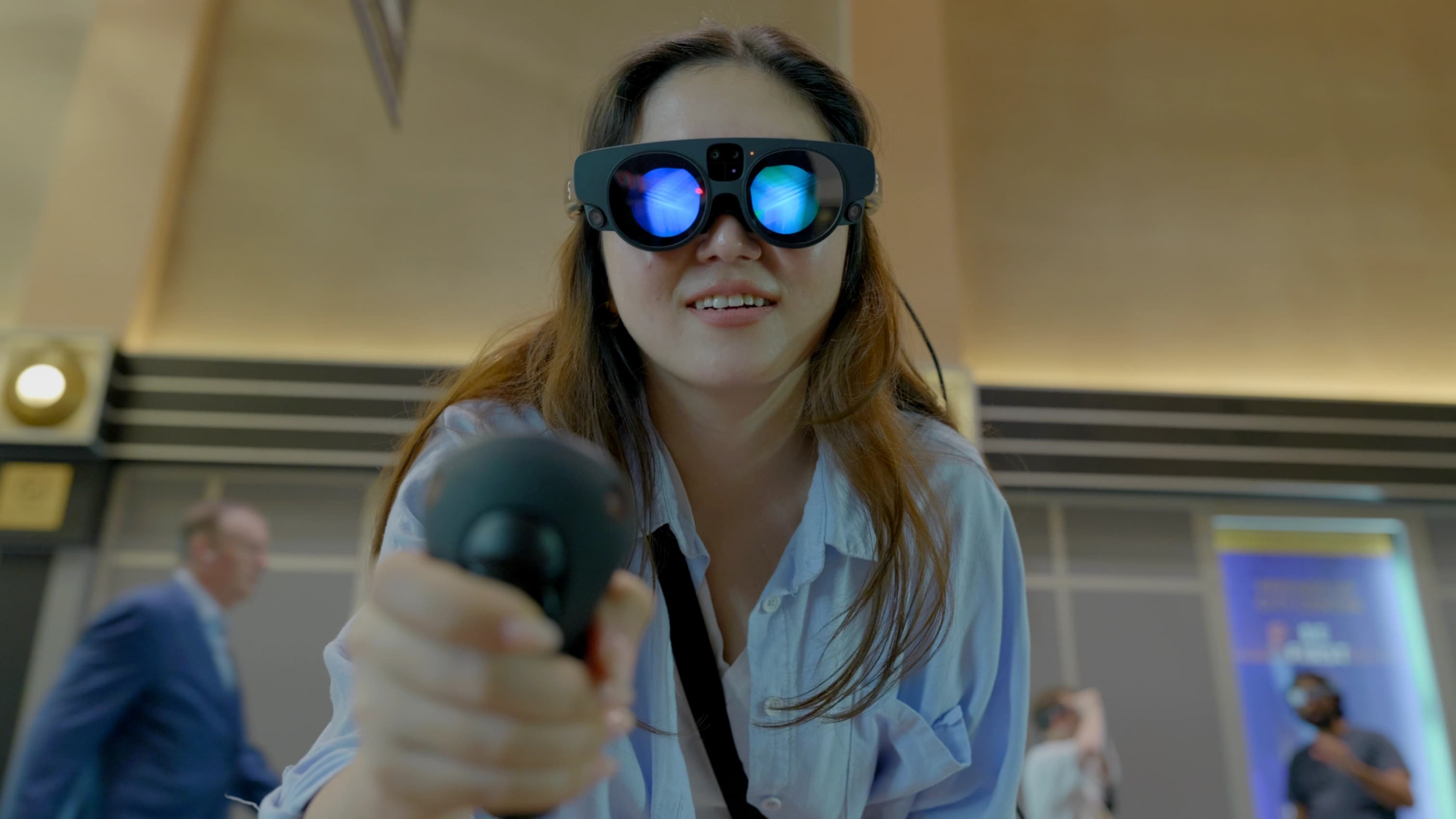
Working at GLO, I have learned that the technology industry has more acronyms than the military. There are acronyms everywhere. Every meeting seems to contain at least three that I have to quietly Google afterward (I have an ongoing document): LBE. HMD. MVP. SDK. SLAM. GUI. OTA. WTF. WTF?!?! It’s like I’m training for the world’s stupidest spelling bee.
But of all these terms, four come up constantly when talking about what we do at GLO: VR, AR, MR, and XR. You probably have heard of VR. You may have heard of AR. The other two? Unlikely? So, let me attempt, in the most non-techie way this tour guide can, to explain what these four terms mean and how they differ.
The easiest one to define is XR, which is short for Extended Reality (as an aside, I’ve always been bothered with how “X” is used in abbreviations. Street signs saying X-ING for crossing drives me up a wall). XR is just an umbrella term for any tech that alters, augments, or replaces our experience of reality. All of the other terms we talk about today are a form of XR. Yes, there is an acronym needed to describe other acronyms. With me so far?
VR stands for Virtual Reality, and I’m going to guess this is the one term you’re familiar with. This is a pretty common concept nowadays, but has actually been around for a while now. The idea of delving into new realities through shoving screens against our eyes goes further than the headsets we know today. As early as the 1960s, we saw tech like the View-Master, the Sensorama, the Ludovico Technique (which worked like clockwork), Sega VR, and Nintendo’s Virtual Boy. Even Disney eventually got in on the action with DisneyQuest, its indoor theme-park-meets-arcade concept, where guests could climb into virtual reality attractions and go on virtual rides without leaving the eerily dark building. The technology has obviously come a very long way since then, but the basic idea has stayed remarkably consistent: put something over your eyes and convince your brain that you're somewhere else.
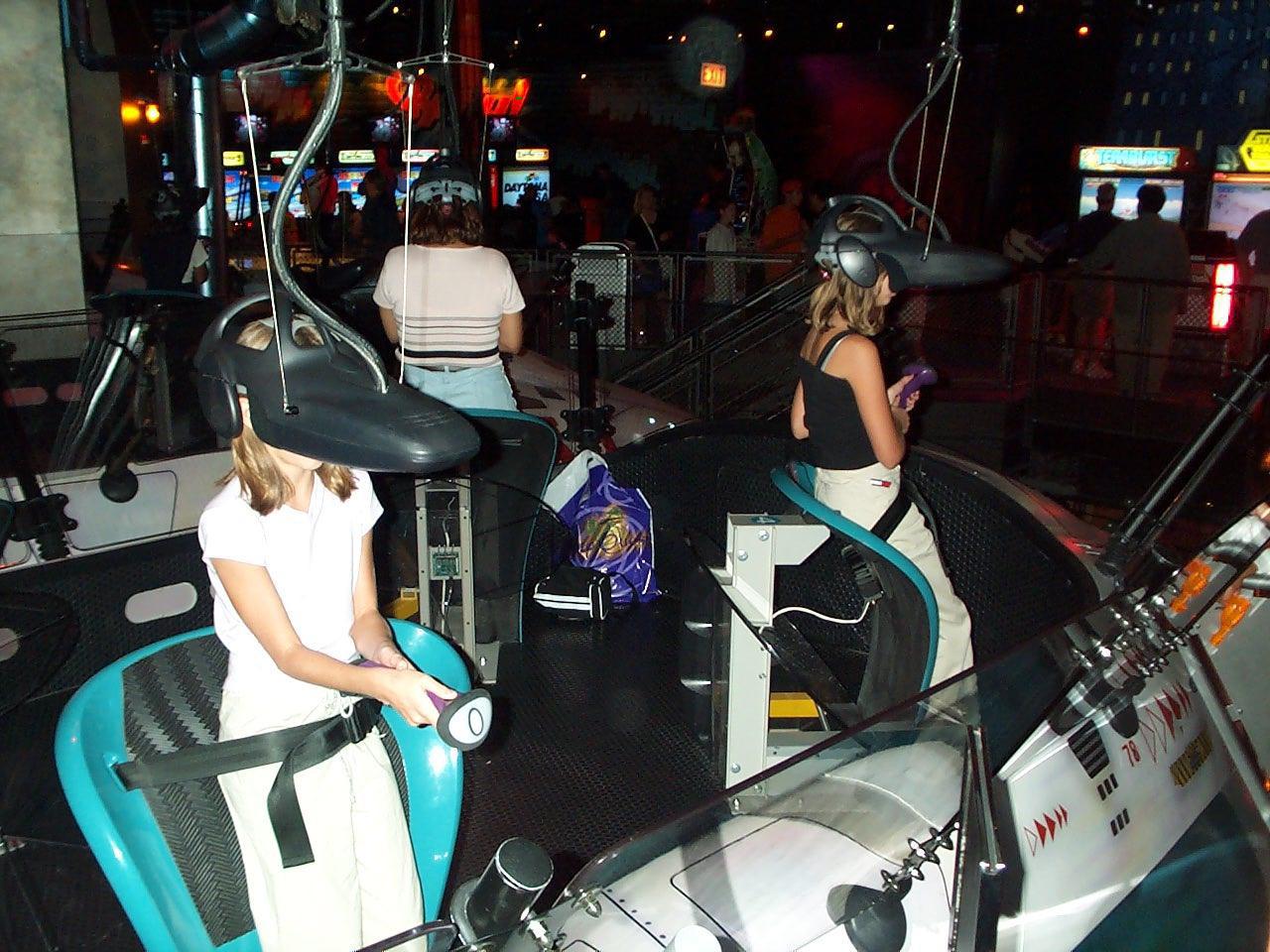
Today, if you ever see someone wearing those big ski goggles over their eyes, those are probably VR, and the main goal of them is to immerse you into another world. Maybe you're playing a video game. Maybe you're exploring outer space. Maybe you're fighting a dinosaur. Maybe you're standing in your living room while your roommate wonders why you're punching the air like your life depends on it. Your surroundings are completely replaced by a digital environment.
VR was one of those technologies that felt like science fiction for a long time. Then, seemingly overnight, people were putting on headsets in shopping malls, in arcades, and in living rooms whilst falling over in front of their family. What once required enormous computers and expensive equipment can now be experienced with something relatively small and affordable. And that, in a nutshell, is the magic of VR: you don't have to go anywhere to go somewhere else.
Speaking of going somewhere else, remember Pokémon Go? You'd point your phone at a sidewalk, a park, or a random patch of grass and suddenly there was a Pokémon standing there. It’s not like you exited the real world in any way, you just had a digital creature hanging out in the middle of it all. That is a version of Augmented Reality, or AR.
And you've probably seen it in other places, too. Instagram and Snapchat filters are a very approachable example. Your phone's camera can recognize your face and give it dog ears and a long, animated tongue (life changing technology, no doubt). AR can also show you things like directions, information, graphics, or 3D objects while keeping the physical world around you. And that's the part we really love at GLO: New York City is too good to replace, but we can mess with it.
Combining the best part of VR (complete immersion) with the best part of AR (still being able to appreciate the real world) has been a continuous North Star for many different companies. You may recall in the early 2010s we were promised the future with Google Glass, a pair of glasses with a small display in the corner of your field of vision.
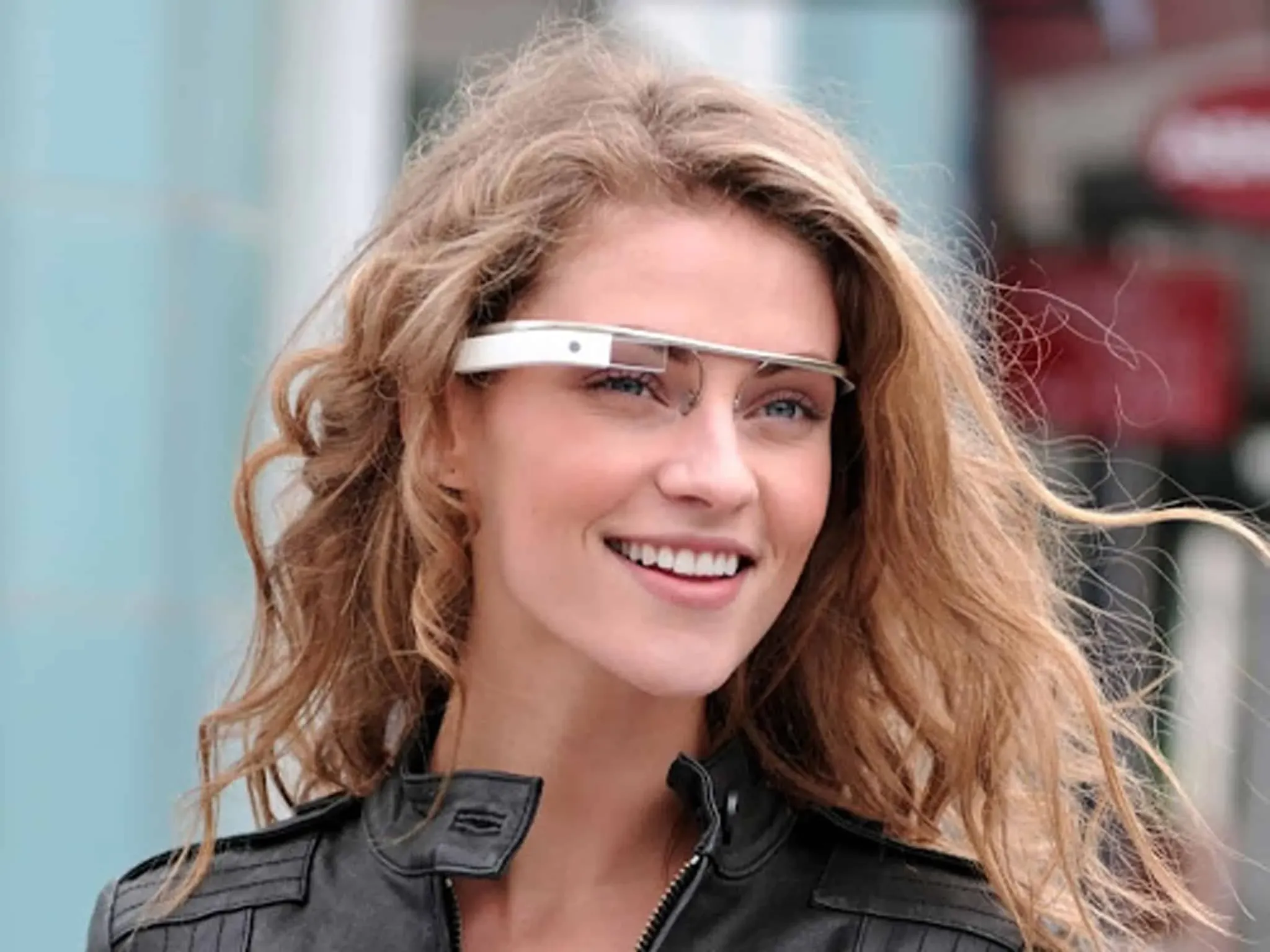
Oh, Google Glass. How I miss that feeling that this was going to change the world. It’s how our whole country felt for a minute. The same energy was felt at the introduction of 3D TVs, Segways, smart refrigerators, Juicero, and hoverboards with their cool built-in explosion feature. This unshakable feeling that that society will fundamentally shift, only for that shift to become a shrug.
It may not have worked out for Google, but that doesn’t mean a myriad of other companies weren’t willing to take a swing. When Apple introduced the Vision Pro, they didn't really want to call it a VR headset, even though it is fundamentally another pair of ski goggles. They, instead, used the term “spatial computer.” It can create completely virtual environments like traditional VR, but it can also show digital objects and screens within your physical surroundings. It uses cameras and sensors to understand the space around you, then displays a live view of the world around you on the screens inside the headset, with digital content layered on top.
For those following along, that sounds like a mix of both VR and AR. There’s a term for this: MR, or Mixed Reality. Generally, Mixed Reality refers to experiences where virtual objects and the physical world can interact with each other. Imagine a virtual character sitting on your actual table. You walk around the table, and the character stays there. It might even disappear behind the lamp. The physical world and the digital world aren't just being shown at the same time, they're being mixed together.
I know this sounds pretty similar to AR, and the reality is that MR and AR aren’t really two neatly separate categories. The way I have come to understand it is that the stronger MR tech understands the real world, while basic AR just sees it. If I wanted to play AR basketball, I could create a digital basketball court in the comfort of my living room. But the more advanced mixed reality version might allow me to go to a real life basketball court and play with a digital ball, watch it bounce, roll behind a real bench, and go into a real hoop. Again, the line between these two terms is not clearly defined, and many companies use them differently and interchangeably, this is just how I understand the distinction.
To complicate matters even more, there are different ways these devices see. The Vision Pro, as well as newer versions of Meta Quest (formally the Oculus) use something called passthrough. The cameras on the outside of the headset capture what's around you, and the screens inside show that view back to your eyes. The computer can then insert digital objects into that video feed. You are still seeing your actual living room, but you're seeing it through a camera, with the digital world layered on top. It’s as if Who Framed Roger Rabbit was filmed live.
There is another approach to AR called Optical AR. Rather than putting cameras between you and the world, Optical AR lets you look directly through a transparent lens at the real world while digital images are projected into your field of vision. A waveguide is one of the clever bits of technology inside these glasses that helps get that digital light where it needs to go (as opposed to a cool name for a surf instructor). The glasses we use at GLO are this type of optical-see-through AR headset, and we chose them for a pretty simple reason: when you're walking around New York City, we want you to actually see New York City. You can see the buildings, the streets, the people, the traffic, and all the other wonderfully chaotic things happening around you, while our digital world is layered into the same view. You're not watching a video of New York through a camera. You're looking at New York itself, because at the end of the day, you’re wearing a real (albeit magical) pair of glasses.
Okay, recap time. VR replaces your world with a digital one. AR adds digital things to the world you're already in. MR makes those digital things understand and interact with the physical world. XR is the big umbrella covering all of it. Passthrough and optical AR are essentially two different ways of getting those digital images into your field of vision.
If that all made sense to you, congratulations. If it didn't, congratulations anyway. You tried, and that’s what matters. The long and the short is that all of these confusing acronyms are trying to answer one question: how can we change the way we experience the world?
There are many places you can go to experience VR. You can put on a headset in your living room and visit another planet. You can go to an arcade and fight zombies. You can have seventeen computer screens floating around your kitchen while you make a sandwich. All equally exciting. But at GLO, we’re in the real streets of Midtown! We never wanted to build a virtual New York City, because New York City is a result of thousands of hands and stories. Some things just can’t be replicated. And hell, we’re right next to Times Square, there are enough screens over there, do we really need another one right in front of our face?
With AR, though, we’re able to add to the city. We can paint graffiti on the wall without a year in jail as a side effect (talk about immersive experience). We can fight robots flying through the air. We can have a massive paintball fight without imperiling a single bystander, with nary a thread besmirched. And I’m aware that for some, the concept of immersion means escaping reality. But I don’t go to the Met or Hamilton or Central Park to forget I’m in New York City. I love New York City because those are places I can immerse myself in! We don't want to take you somewhere else. We want to make you look at the place you're already standing in a little differently.
So if you're curious, come see it for yourself by booking a GLO Graffiti tour. Put on a pair of AR glasses, walk through Midtown with me, and let us mess with your perception of New York for an hour. You don't have to understand SLAM, HMDs, waveguides, or whatever the hell MVP stands for (I’m not a sports guy, but I do know this is a different MVP). You focus on having a good time, I’ll focus on the acronyms (but please don’t test me).